You’ve made it to the final chapter — and this is where it all lands…
The base commander’s name was Colonel Frank Ortega, and he had been dreading this visit since the moment he’d received the notification from the oversight office — a notification that had been deliberately vague, as these things always were, giving him the subject but not the scope, the date but not the details.
He had spent the past two weeks quietly hoping it would amount to nothing.
He was in his office when his aide knocked.
“Sir.” The young corporal’s voice had a particular quality to it. “Captain Voss is here. And, sir — there’s been an incident.”
Ortega closed his eyes for exactly one second.
Then he opened them, straightened his posture, and said, “Send her in.”
What Accountability Actually Looks Like
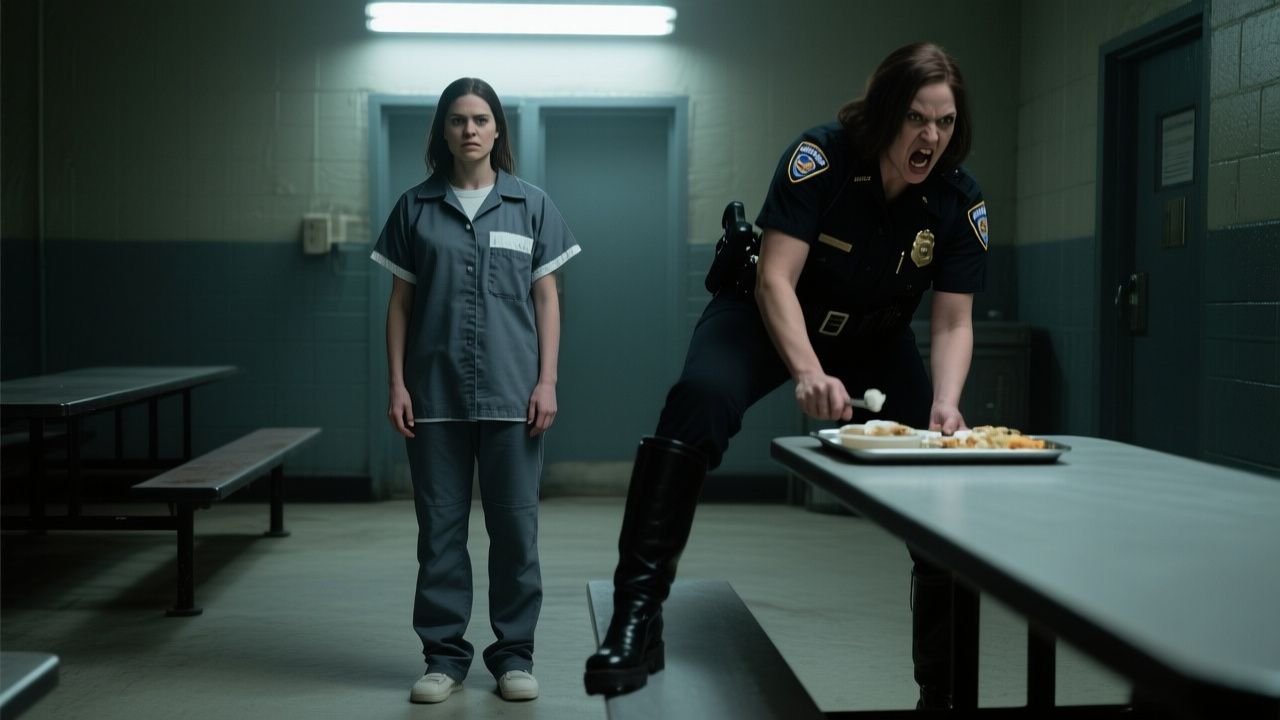
Renata entered the way she did everything — without announcement, without theater, without apology for taking up space.
She sat across from him, placed her file folder on the desk between them, and looked at him steadily.
“I was here for forty minutes before the meeting,” she said. “I wanted to observe the mess hall. Standard procedure.” She paused. “I think you’ll agree I got a fairly comprehensive observation.”
Ortega looked at the folder. He looked at her. He looked at the folder again.
“Captain—”
“Colonel, I have seven documented complaints in this file spanning fourteen months. Three from enlisted personnel. Two from civilian contractors. One from a junior officer who was subsequently transferred. And one that was filed and then — interestingly — withdrawn under circumstances that the file doesn’t fully explain.”
She opened the folder and turned it to face him.
“I’m not here to punish a base. I’m here because these complaints describe a pattern, and patterns don’t fix themselves. What happened this morning in your mess hall is not an isolated incident. It is a symptom.”
Ortega looked at the documents.
She gave him time to read.
The silence in the room was not uncomfortable. It was the silence of a man confronting something he had found reasons to look away from, and realizing, perhaps for the first time, that looking away had a cost.
“Merrick,” he finally said. “He’s been—”
“He’s been enabled,” Renata said, not unkindly. “That’s different from being inherently irredeemable. But enabled is what the record shows.”
She let that sit.
“The evaluation I submit will include this morning’s incident as a direct field observation,” she continued. “The outcome of that evaluation will depend significantly on what you do next — not what you’ve done before, but what you choose to do now. Today.”
Ortega nodded slowly.
It was not the nod of a man being defeated. It was the nod of a man being reminded of who he was supposed to be.
—
Merrick was placed on administrative review by three o’clock that afternoon.
It wasn’t immediate termination. It wasn’t dramatic or theatrical. It was a process — the kind of slow, grinding, institutional accountability that doesn’t make for exciting television but is, in reality, the mechanism through which things actually change.
He would have hearings. He would have documentation reviewed. People who had been silent for fourteen months would have the opportunity — for the first time, with someone watching — to speak.
Many of them did.
The corporal who’d been shoved against a wall over a scheduling mix-up.
The contractor who’d been screamed at in front of her entire team for asking a question about safety protocol.
The lieutenant whose complaint had been quietly buried — she was located, she was contacted, she was asked if she wanted to add her account to the record.
She did.
—
Renata was back on the highway by five.
The sun was hanging low over the flat, dry landscape, painting the road in shades of amber and copper. She had the window cracked and the radio off. Her book was on the passenger seat, still marked at the page she’d been reading when the shadow fell across her tray.
She wasn’t thinking about the strike, or the floor, or the sound Merrick made when he landed.
She was thinking about the faces she’d seen in that mess hall in the seconds after.
The relief.
That was what had stayed with her.
Not the shock, not the excitement, not even the justice of it — but the specific, unmistakable look of relief on the faces of people who had watched this happen to others, or had experienced it themselves, and had never once expected to see it interrupted.
That look was the whole job.
That look was why she drove four hours and sat in mess halls in civilian clothes and read files three times before she arrived anywhere.
Not to be impressive. Not to be the story.
But to be the interruption.
—
There is a particular kind of strength that the world doesn’t always recognize on sight.
It doesn’t announce itself. It doesn’t need a uniform, or a title printed on a name tag, or a crowd to validate it. It walks into a room, finds a corner seat, opens a book, and goes about its day with a quietness that some people mistake for vulnerability.
Those people are occasionally corrected.
Renata Voss drove home in the amber light of a Tuesday evening, ate dinner, and filed her preliminary report before ten o’clock.
She was on the road again by Thursday.
There was another base. Another file. Another room full of people who had learned to keep their eyes down and their voices low.
She was looking forward to meeting them.


0 Comments